
Introducing Wellbeing Monitor
A safe, non-diagnostic, adult-only platform designed to support staff wellbeing where time or capacity for supervision is limited, alongside existing provision.
How's your mental health?
If you have ever heard me speak, you may well remember that I had suffered a catastrophic burnout which left me in hospital. Although I remember feeling very tired, what happened next took me completely by surprise.
Since then, I've worked to help and support other people with their mental health and wellbeing. The Developing a Culture of Supervision course has really helped with that. As I travel around the country, I meet former DSLs who now work in other roles, and I even meet people who are no longer in the profession because of the work they did as a DSL.
Is supervision enough?
Supervision is being offered to many more staff than ever before, but provision is patchy. In any case, it's often limited by time or money or both. So, what can fill the gap?
Introducing Wellbeing Monitor
Over the past few months, I've been working with a developer, a psychologist, and a therapist, and we've created Wellbeing Monitor.
Wellbeing Monitor for Education is a secure wellbeing and resilience toolkit for teachers, teaching assistants, pastoral teams, DSLs, SENCOs, heads of year, and school and college leaders.
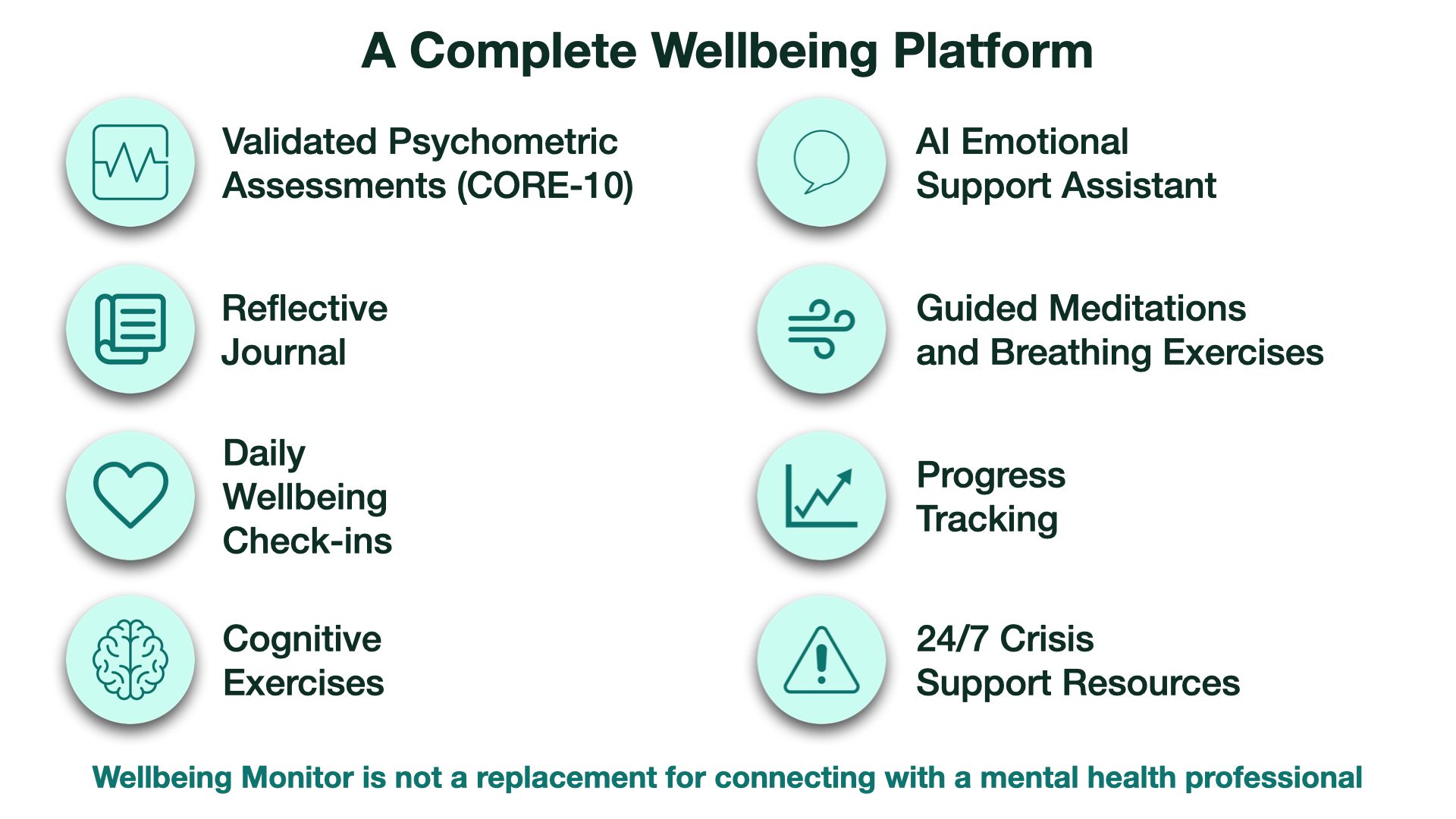
At its heart is a secure emotional AI assistant, available for regular check-ins and reflective conversations, alongside validated psychological measures, journaling, mindfulness, and cognitive tools.
Together, these help staff understand stress, emotional load, and burnout risk and take small, practical steps to protect their wellbeing while continuing to support pupils and families.
Find out more with our detailed video walk-through
The best way to understand Wellbeing Monitor is to watch the video below.
How will Wellbeing Monitor help?
- Completing a daily assessment will maintain balance in your physical, mental, and emotional wellbeing.
- Our emotional AI support Assistant provides a safe space for emotional support and guidance.
- Meditation helps calm the mind, improve focus, reduce stress, and support emotional balance by training your attention and awareness.
- Breathing exercises help regulate the nervous system, reduce stress and anxiety, improve focus and sleep, and support overall physical and emotional wellbeing.
Frequently Asked Questions
What is the Well-Being Monitor?
The Well-Being Monitor is a secure digital platform designed to support the emotional wellbeing of professionals working in emotionally demanding roles. It brings together evidence-based monitoring, reflective tools, and practical wellbeing resources in one place.
Who is the platform for?
The platform is designed for people who regularly support others, such as school leaders, DSLs, safeguarding professionals, pastoral staff, and other education or care professionals. It can be used individually or as part of a wider organisational wellbeing offer.
Is the Well-Being Monitor a mental health diagnostic tool?
No. The Well-Being Monitor is not diagnostic. It uses a recognised psychological monitoring tool to help individuals notice patterns and changes in how they are feeling over time. Its purpose is early awareness and reflection, not diagnosis or treatment.
What psychological tool does the platform use?
The wellbeing tracker is based on the CORE-10, a widely used, evidence-based psychological monitoring tool that has been peer-reviewed and used internationally for many years. It is designed for monitoring wellbeing over time, not diagnosing mental health conditions.
What happens if the tracker suggests someone may be struggling?
If responses indicate increased distress, the platform provides clear guidance and signposting. This is intended to support earlier conversations with colleagues, supervisors, or appropriate professionals, rather than waiting until difficulties escalate.
Does the platform replace supervision, counselling, or therapy?
No. The Well-Being Monitor is not a replacement for professional supervision, counselling, or mental health support. It is designed to complement existing support by providing structured reflection and early awareness when formal support is not immediately available.
What is the AI-supported emotional reflection tool?
The emotional reflection tool is an AI-assisted space designed to prompt reflective thinking in a way similar to supervision or therapeutic conversations. It asks gentle, structured questions to help users pause, reflect, and make sense of what they are experiencing.
Is the AI tool safe and appropriate for safeguarding professionals?
Yes. The AI tool has been purpose-built for emotional reflection only. It does not provide advice, diagnoses, or instructions, and it does not support unrelated tasks such as lesson planning or email writing. Clear boundaries are built in, and users are directed to seek professional help if they are in crisis.
How often can the emotional reflection tool be used?
Sessions are limited to one hour within a 24-hour period. The platform encourages thoughtful, purposeful use rather than frequent or prolonged sessions, as overuse may itself indicate a need for additional human support.
What other wellbeing tools are included?
The platform includes daily check-ins, reflective journalling, guided breathing exercises, calming soundscapes, optional meditations, affirmations, and light cognitive activities such as word puzzles and brain training tasks. Users can choose which tools work best for them.
Is the platform confidential?
Yes. The platform is designed to be private and confidential. Users are reminded not to include identifying details about themselves or others when reflecting.
What happens to my data?
User responses are not used to train any AI systems, are not shared with third parties, and are not accessed for monitoring purposes. When an account is deleted, all associated data is permanently removed.
Can organisations see individual user data?
No. The platform does not provide organisations with access to individual reflections, responses, or wellbeing data. It is designed to support personal reflection and wellbeing, not performance management.
Is the Well-Being Monitor suitable for daily use?
Some elements, such as brief check-ins or breathing exercises, may be used daily. Other tools, such as the emotional reflection assistant, are best used more selectively. The platform is designed to fit flexibly into individual routines.
Why was this platform developed?
The Well-Being Monitor was developed in response to the emotional demands placed on safeguarding and caring professionals. Its aim is to support sustainability, reduce burnout risk, and help people notice when they may need additional support — earlier rather than later.
Any questions?
To get in touch, email us: [email protected]